
The Foundation for Research and Technology – Hellas
The Foundation for Research and Technology – Hellas (FORTH) was founded in 1983. It is one of the largest research centers in Greece with well-organized facilities, highly qualified personnel and a reputation as a top-level research institution worldwide. From FORTH two institutes are participating in AFRICAI-RI, the Institute of Computer Science (FORTH-ICS) and the The Biomedical Research Institute (BRI) of FORTH (FORTH-BRI). Specifically, the Computational BioMedicine Laboratory (FORTH-ICS-CBML) of FORTH focuses on the development of novel ICT technologies in the wider context of personalized, predictive and preventive medicine aiming at the optimal management of chronic diseases. CBML has an extensive experience in the areas of biomedical informatics, AI-based medical image processing and biomedical signal processing, and affective computing. Moreover, the Unit of Medical Technology & Intelligent Information Systems (FORTH-BRI-MedLab) is a highly innovative and self-contained research unit strongly activated in the fields of Biomedical Engineering and development of Intelligent Information systems. MedLab’s research activities cover a variety of subjects and they are classified into the following domains: Multiscale modeling of human organs, biomedical engineering, decision support systems, bioinformatics, multi-scale predictive modeling, data mining, and big data, wearable systems for monitoring and management of chronic diseases and intelligent information.
Dr. Nikolaos Tachos
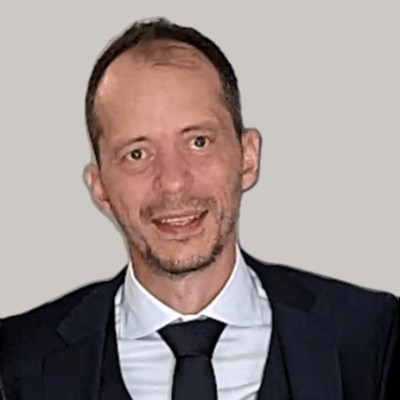
Dr. Nikolaos S. Tachos holds a Diploma and a Ph.D. in Mechanical Engineering from the University of Patras, with specialization in aerodynamic and aeroacoustic analysis. He is currently a Senior Resarcher at the Unit of Medical Technology and Intelligent Information Systems, University of Ioannina, and a Postdoctoral Fellow at the Foundation for Research and Technology – Hellas (FORTH). His work spans over two decades of research and innovation in Biomedical Engineering, with a strong focus on data-driven methodologies, artificial intelligence, and computational modeling. Dr. Tachos has served as a senior researcher and technical manager in numerous national and European-funded RIA and IA projects, including SEEFAR, SILICOFCM, PROCANCER-I, EUCAIM, RADIOVAL, FAITH, SMARTINSOLE, and REHABOTICS. His core research interests involve the development and application of advanced AI methods for large-scale medical data processing, simulation modeling, and decision support systems in healthcare. In addition to his technical and scientific expertise, Dr. Tachos is a recognized authority in regulatory affairs, particularly in the context of the Medical Devices Directive (MDD) and the Medical Device Regulation (MDR). He has successfully led the regulatory transition from MDD to MDR for Software as a Medical Device (SaMD), ensuring compliance, risk assessment, CE marking, and ISO 13485-based quality management systems.
Nikos Tsiknakis, M.Eng.

Nikos Tsiknakis holds a Master of Engineering (MEng) in Electrical and Computer Engineering from the University of Patras. In 2019 he joined Computational BioMedicine Laboratory (CBML) at ICS FORTH, where he has contributed to several collaborations, national and international projects. His work has focused on medical image analysis, employing both traditional image processing methods and AI-based approaches. He’s currently pursuing his PhD degree on AI-based analysis of histopathology data for breast cancer biomarker discovery for prediction and prognostication. Moreover, he has a keen interest in validation studies that focus on understanding the reliability, clinical validity, and comparative performance of AI algorithms relative to traditional biomarkers, as well as assessing trust, robustness, and practicality of AI models for clinical integration and usability.
Dr. Valia Kalokyri
Dr. Valia Kalokyri is a Post-Doctoral Researcher at FORTH specializing in data harmonization, integration, and interoperability. Her work focuses on the design of common data models, semantic integration, interoperability tooling, and federated infrastructures for cancer imaging and related clinical data. She builds on her technical leadership in the EUCAIM project, where she contributed to establishing the pan-European Cancer Image Europe infrastructure for large-scale research. She also has strong expertise in data anonymization and privacy-preserving data sharing, having been awarded first prize in the “Re-identification Challenge” organized by the ChAImeleon AI4HI project.