AFRICAI-RI Showcases African AI Infrastructure and Trustworthy AI at MICCAI 2026
AFRICAI-RI was represented at the MICCAI 2026 in Strasbourg this week, contributing to discussions on the infrastructure needed to advance medical imaging research across Africa and the importance of trust in the development and adoption of artificial intelligence in healthcare.
The Medical Image Computing and Computer Assisted Intervention (MICCAI) conference brings together researchers, clinicians, engineers and other stakeholders working at the intersection of medical imaging and AI. AFRICAI-RI contributed to the programme through both a dedicated workshop and the conference’s opening keynote.
Assessing infrastructure readiness for federated learning
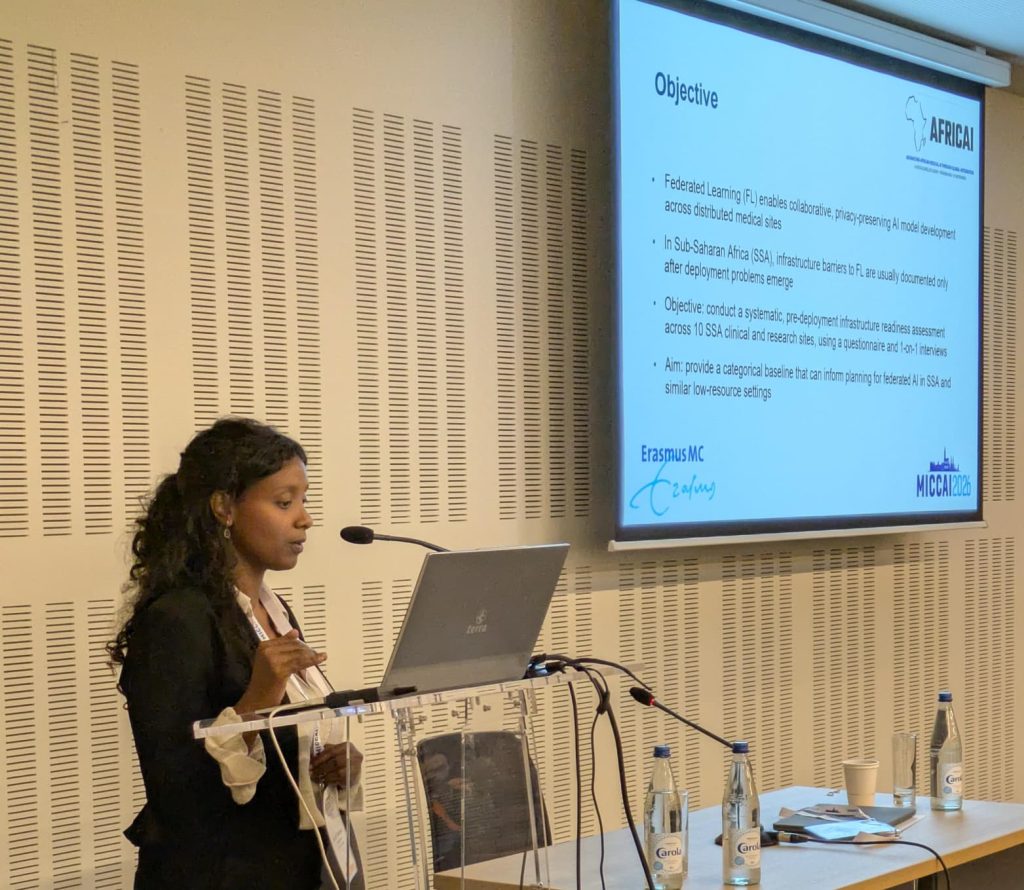
On Sunday, Mahlet Birhanu from EMC presented a study titled “Infrastructure Readiness Assessment for Federated Learning in Medical Imaging across African Sites” as part of the AFRICAI workshop.
The study draws on interviews with AFRICAI-RI’s African partner institutions to examine the infrastructure available across different sites, as well as local needs and levels of readiness for implementing federated learning approaches.
Federated learning offers a way for institutions to collaborate on AI research while keeping data at the sites where it is held. Understanding the technical infrastructure, resources and requirements of participating institutions is therefore an important step towards establishing sustainable and effective federated learning collaborations.
The assessment provides insight into the different contexts in which medical imaging AI research is being developed across African sites and helps identify the infrastructure and support needed for future collaboration.
Trust at the centre of AI in healthcare
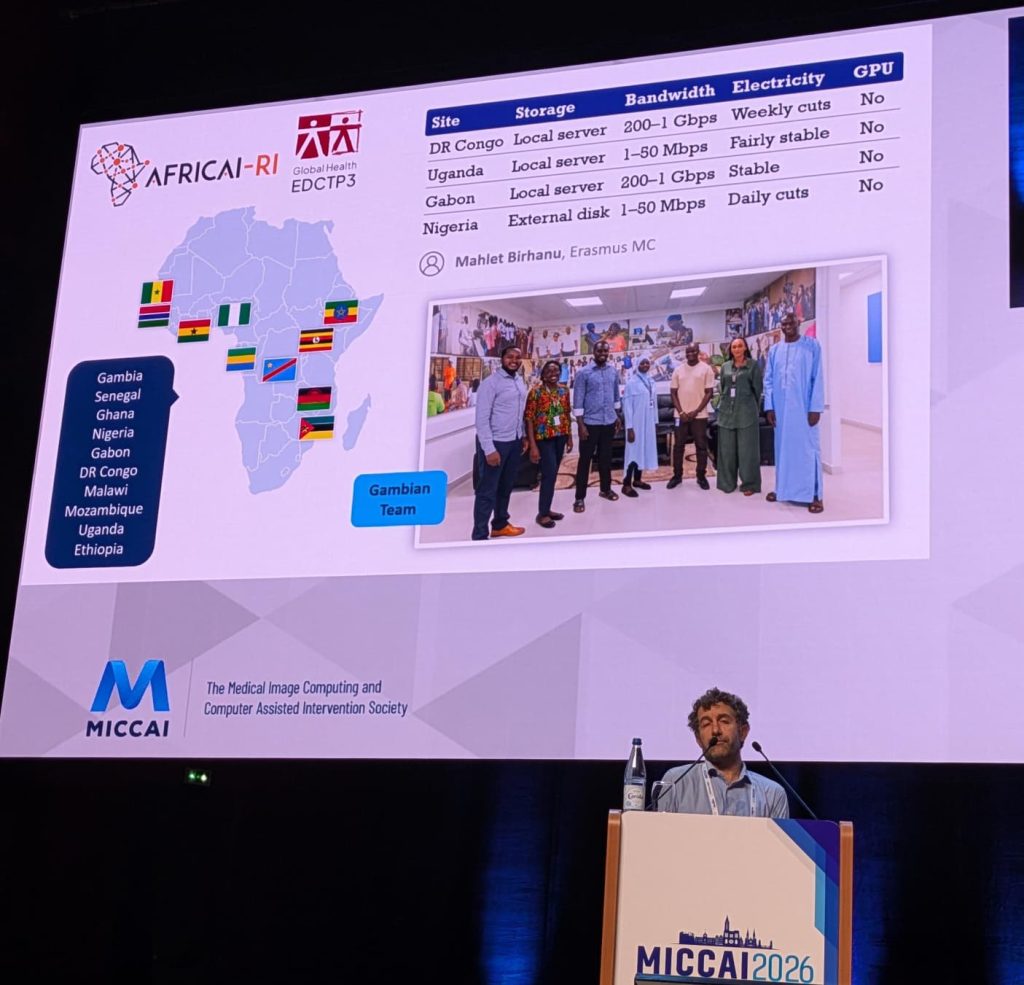
On Monday, AFRICAI-RI Project Coordinator, ICREA Research Professor Karim Lekadir delivered the opening keynote at MICCAI 2026, focusing on the role of trust and trustworthiness in the development and adoption of AI for healthcare.
The keynote highlighted that building trustworthy AI involves more than developing technically capable systems. It also requires engagement with the people and institutions who will use, implement and ultimately benefit from these technologies.
This includes working with local stakeholders to understand their priorities, needs and expectations, and ensuring that AI solutions are developed in ways that are relevant to the contexts in which they will be deployed.
For AFRICAI-RI, this approach is closely aligned with the project’s broader objective of strengthening AI research infrastructure through collaboration with African institutions and researchers.
Building AI research infrastructure with Africa
The contributions at MICCAI 2026 reflect two complementary aspects of AFRICAI-RI’s work: understanding the infrastructure required to enable collaborative AI research, and ensuring that the technologies emerging from that research are developed in a way that can earn and sustain trust.
Together, the workshop presentation and keynote underlined the importance of context, collaboration and stakeholder engagement in advancing medical imaging AI.
By working with African partners to understand local infrastructure and research needs, AFRICAI-RI aims to support the development of AI research capacity and infrastructure that is built with Africa, for Africa.
AFRICAI-RI thanks Mahlet and Karim for representing the project at MICCAI 2026 and contributing to discussions on the future of AI and medical imaging research.